

For many patients, rhinoplasty begins with a clear vision: refinement, improved balance, or better breathing. Yet the nose is one of the most complex bodily structures, and even well-performed procedures can yield unexpected results as healing progresses.
This is where patients need to understand the distinction between primary and revision rhinoplasty. While primary rhinoplasty focuses on shaping the nose for the first time, revision rhinoplasty adjusts the results of a previous procedure and often addresses both form and function
It has to address prior surgical changes, work around scar tissue, and handle already altered anatomy with precision and restraint.
The complexity of revision rhinoplasty leads many patients to seek an experienced nose revision specialist in New York City: someone with the expertise to refine without over-correcting and restore harmony without compromising structure.
At Pearlman Aesthetic Surgery, Dr. Steven Pearlman brings decades of experience in facial plastic surgery, with a reputation for thoughtful refinement and natural-looking outcomes. Guided by his philosophy, “We Empower Beauty®,” he approaches each facial procedure as a collaboration that prioritizes both structure and subtlety.
In this blog, we explore the differences between primary and revision rhinoplasty, what patients can expect from each, and how choosing the right surgeon can shape your entire experience.
What Is Primary Rhinoplasty?
Primary rhinoplasty is a first-time nose surgery, different from secondary or revision procedures. Because the nose has not been operated on previously, the underlying anatomy is usually intact, allowing for more flexibility in surgical planning.
Primary rhinoplasty may focus on:
- Smoothing a dorsal hump
- Refining the nasal tip
- Correcting asymmetry
- Improving breathing function
The goal of this procedure is to create a nose that feels balanced with the entire face, rather than a nose that draws attention to itself.
Primary Rhinoplasty Outcomes
One of the defining characteristics of primary rhinoplasty is that it is relatively predictable. With stable and unchanged cartilage, bone, and soft tissue, surgeons can more reliably execute structural refinements and predict how the nose will heal.
With a skilled facial plastic surgeon like Dr. Pearlman, patients can expect to achieve an improved nasal appearance and function that stays harmonious with their other facial features.
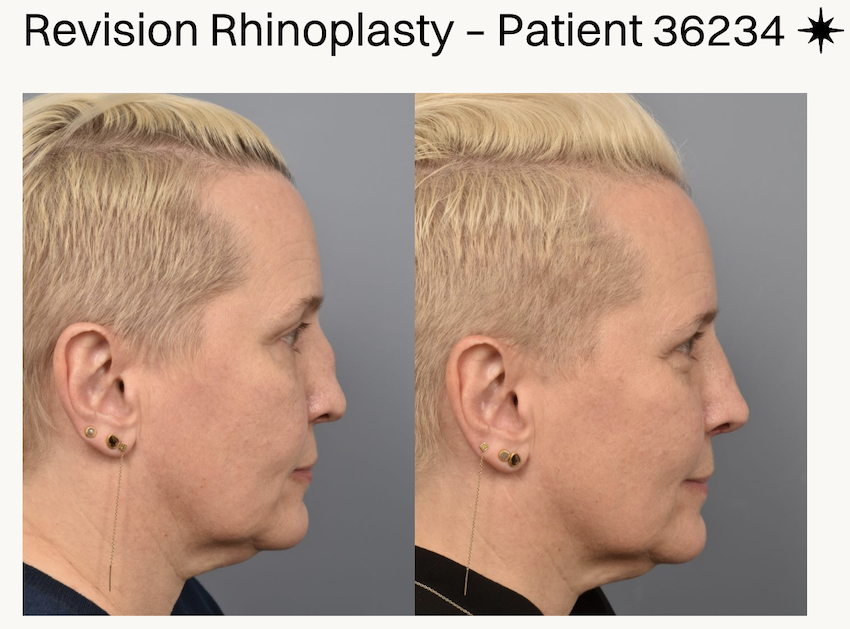
What Is Revision Rhinoplasty?
Revision rhinoplasty, also known as “secondary rhinoplasty,” is performed after a previous nose surgery to adjust the results. Its purpose may be aesthetic, functional, or both.
Unlike primary procedures, revision rhinoplasty must account for:
- Scar tissue formation
- Structural changes from prior surgery
- Limited availability of native cartilage in the nose
A skilled nose revision specialist in New York City must carefully evaluate:
- What has been altered
- What can be preserved
- What must be rebuilt
Revision Rhinoplasty Outcomes
Outcomes for revision rhinoplasty are slightly less predictable than those of a primary rhinoplasty. This is due to the complexity of this procedure and the unique challenges associated with precision surgery.
However, by choosing an experienced nose revision specialist in New York City, like Dr. Pearlman, patients can dramatically improve their chances of achieving successful outcomes and a beautiful, balanced result.
When they choose an expert, revision rhinoplasty patients often see:
- Correction of visible irregularities
- Improved symmetry and contours
- Restored nasal support and breathing
It is important for patients undergoing secondary rhinoplasty to have realistic expectations. While the procedure can make significant improvements, achieving absolute perfection may not be possible in all cases.
While both primary and revision rhinoplasty aim to improve the appearance and function of the nose, there is a distinct difference between the two in terms of complexity, surgical approach, and potential outcomes.
At a Glance: Primary vs. Revision Rhinoplasty
| Factors | Primary Rhinoplasty | Revision Rhinoplasty |
| Anatomy | Unaltered | Surgically altered |
| Complexity | Moderate to high | High to very high |
| Cartilage availability | Abundant | Can be limited |
| Predictability | More predictable | Less predictable |
| Surgical goals | Enhancement (aesthetic and functional) | Correction and refinement |
| Emotional Context | Usually excited | Often cautious or frustrated |
Why Revision Rhinoplasty Is More Complex
Revision rhinoplasty is one of the most technically demanding procedures in facial plastic surgery. Scar tissue, altered anatomy, and the potential absence or significant deformity of cartilage from the initial surgery all add to the complexity of the procedure.
Scar Tissue Complexities
Scar tissue is one of the primary factors that makes revision procedures more complex.
Unlike normal tissue, scar tissue:
- Is less flexible and more difficult to reshape
- Has variable thickness and density
- Can obscure underlying structures
A nose revision specialist in New York City must exhibit exceptional skill and precision when navigating this altered landscape during a revision procedure. Additionally, a surgeon must balance the removal of excess scar tissue while minimizing additional, new scars.
Structural Reinforcement
In many revision cases, the previous surgery has weakened or altered the original support of the nose. A revision rhinoplasty surgeon needs to rebuild this framework to improve the function of the nose while enhancing its aesthetics. Nostril revision may also be necessary.
Because of this, cartilage grafting may be required to restore structural support and maintain both the shape and function of the nose. While septal cartilage is typically preferred for rhinoplasty, it may no longer be available after a prior procedure.
In these situations, surgeons may use cartilage from other areas of the body to reinforce the nasal framework, support proper airflow, and help ensure long-term stability.
This added layer of reconstruction both increases the technical demands and highlights the importance of surgical expertise.

Managing Surgical Unpredictability
No two revision cases are identical. Each nose has variations in healing, prior surgical techniques, and individual anatomy. This means any nose revision specialist in New York City must be prepared to adapt in real time to each unique revision procedure.
Experienced specialists rely on:
- Careful preoperative planning
- Advanced grafting techniques
- Decision-making during the operation
These surgeons have honed their skills through intense practice, so they can minimize potential risks. Their ability to make informed decisions during the operation plays a crucial role in the procedure’s success.
This ability to adjust care with precision separates general providers from true specialists in revision rhinoplasty.
Emotional Considerations
Revision rhinoplasty is not only a physical process, but often an emotional one as well. Patients may arrive at their surgery frustrated with their prior outcomes, anxious about undergoing another procedure, and cautious about potential results.
Choose a revision specialist with a thoughtful, communicative approach. They can reassure you about the process and keep your expectations aligned, so you know exactly what to anticipate.
What to Look for in a Revision Rhinoplasty Surgeon
An experienced nose revision specialist in New York City is uniquely equipped to navigate the intricacies of tissue scarring and nasal architecture as a result of previous surgeries.
Specialized surgeons who focus on revision rhinoplasty—like Dr. Pearlman—can bring a wealth of knowledge and expertise to the procedure. That experience can only be gained through years of addressing diverse and intricate cases.
A qualified nose revision specialist should have:
- Extensive experience in both primary and revision rhinoplasty
- Deep understanding of nasal anatomy and reconstructive techniques
- A consistent portfolio of before-and-after results
- Clear and honest communication about the process
At Pearlman Aesthetic Surgery, these qualifications are reflected in every interaction we have with our patients. Each consultation is designed to be a collaborative effort that’s educational and tailored to each individual’s needs.
-
Credentials and Experience
As the first step in selection, thoroughly research your potential surgeon’s credentials and experience. Look for specialists with proven track records in facial plastic surgery, and more specifically, in rhinoplasty.
-
Patient Reviews and Testimonials
Gaining insight from the experiences of previous patients is invaluable when selecting a surgeon. Patient reviews and testimonials provide firsthand accounts of the surgeon’s skill, bedside manner, and the overall patient experience.
-
Surgical Approach
The success of revision rhinoplasty often lies in the surgeon’s ability to navigate the complexities of correcting previous procedures.
Your surgeon should pair the latest facial plastic surgery techniques and advanced technologies with a tailored approach to suit your individual characteristics.

Elevate Your Results with Expert Guidance
Knowing whether you need primary or revision rhinoplasty begins with understanding where you are in your journey. For some, your initial surgery is the first step toward refining facial balance. For others, it’s a decision to revisit and improve upon a previous result.
Understanding the differences between these two procedures enables you to make more informed decisions about your care. It also reinforces an important truth: successful outcomes aren’t defined by how much is changed, but by how thoughtfully those changes are implemented.
If you’re ready to take the next step or want to better understand what’s possible, meeting with a nose revision specialist in New York City is an important first step.
Schedule a consultation with our team at Pearlman Aesthetic Surgery to explore your options, from revision rhinoplasty to dorsal hump removal, and begin developing a plan to support your goals for nasal aesthetics and function.