
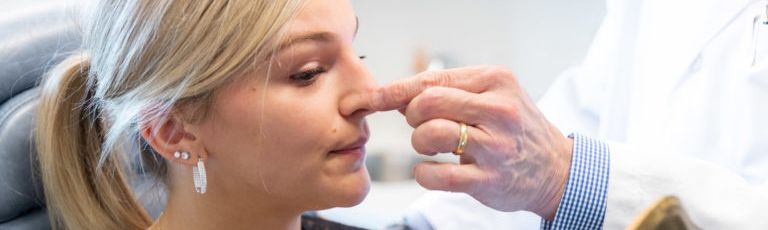


Every rhinoplasty process begins long before the surgery day. Before discussing any surgical approaches, an experienced facial plastic surgeon must consider what a patient wants to change and how those elements of the nose contribute to both appearance and function.
The nose is far more complex than it might appear from the outside. Beneath the skin lies an intricate framework of bone, cartilage, connective tissue, and specialized support structures that determine your nasal profile, tip definition, breathing, and overall facial harmony.
During every nose job near Lenox Hill at Pearlman Aesthetic Surgery, leading nasal expert Dr. Pearlman carefully evaluates each of these elements to create results that look balanced, feel natural, and preserve healthy function.
Understanding the anatomy behind rhinoplasty also helps explain why no two procedures are ever identical. Every patient’s facial structure, cartilage strength, skin thickness, and aesthetic goals require a customized surgical plan.
Table of Contents
- Why Nasal Anatomy Matters
- The External Features That Affect Your Profile
- The Cartilage That Gives the Nose Its Shape
- The Bony Foundation of the Nose
- Common Rhinoplasty Terms
- Frequently Asked Questions About Nose Jobs
Why Nasal Anatomy Matters During a Nose Job
Near Lenox Hill, successful rhinoplasty requires a surgeon to understand how every component of the nose works together:
- Bone creates the foundation.
- Cartilage provides support and flexibility.
- Soft tissue influences contour.
- The internal airway determines how well the nose functions.
Altering one structure often affects several others, which is why every adjustment requires careful planning and precise execution.
How Dr. Pearlman Honors Your Anatomy
When performing a rhinoplasty, Dr. Pearlman evaluates the relationship between each anatomical structure before recommending a personalized surgical plan.
He tailors every procedure to the patient’s unique:
- Anatomy
- Facial proportions
- Skin characteristics
- Long-term goals
This comprehensive approach allows him to achieve what every exceptional rhinoplasty should accomplish: a nose that looks naturally balanced, complements the surrounding facial features, and functions as beautifully as it appears.
The External Features That Affect Your Profile
The visible portions of the nose work together to create your facial profile. Even subtle adjustments in one area of structure can influence how the entire face appears.
The Nasal Bridge
The nasal bridge extends down the center of the face, from the upper portion of the nose to the nasal tip, and it serves as one of the face’s defining contours. The height, width, and profile of this ridge largely determine how “prominent” the nose appears, from both the front and the side.
During a nose job near Lenox Hill, you may want to refine the bridge by reducing a dorsal hump, narrowing wide nasal bones, or smoothing contour irregularities to create better balance with the surrounding facial features.
The Nasal Tip
The nasal tip naturally draws attention because it projects outward more than any other portion of the nose. Its size, shape, rotation, and definition all influence facial harmony.
Rather than dramatically resizing the tip, modern rhinoplasty refines its contours while preserving structural support. This approach allows the nose to complement the rest of the face instead of becoming its focal point.
The Alae
The alae form the soft outer walls of the nostrils, and they help determine the width of the nasal base. Because they consist primarily of fibro-fatty tissue rather than bone, they require a different surgical approach than other portions of the nose.
Patients seeking a nose job near Lenox Hill sometimes benefit from subtle alar refinement to reduce nostril flare or create better proportion without compromising natural expression.
The Columella
The columella is the narrow strip of tissue separating the nostrils at the nasal opening. Although small, it offers significant support for the nasal tip, influencing its projection (how far the tip protrudes from the face).
During open rhinoplasty, Dr. Pearlman places a carefully concealed incision along the columella, providing exceptional visibility of the underlying anatomy for precise structural refinement.
The Radix and Glabella
The radix marks the point where the nose begins between the eyes, while the glabella is the smooth area between the eyebrows just above it.
Together, these landmarks establish the transition from the forehead to the nose. Even subtle modifications in this region can dramatically improve profile balance and create a smoother, more natural facial contour during a nose job near Lenox Hill.
The Cartilage That Gives the Nose Its Shape
While bone forms the upper portion of the nose and nasal bridge, cartilage provides the flexibility, support, and definition of the middle and lower sections. These structures are essential, so preserving their support is just as important as improving their appearance.
Lower Lateral Cartilages
The lower lateral cartilages create the framework of the nasal tip. These connected cartilages determine tip projection, rotation, nostril shape, and overall definition.
Rather than removing large amounts of cartilage, modern rhinoplasty often reshapes and reinforces these structures to narrow the tip yet maintain both long-term stability and natural-looking results.
Septal Cartilage
The septum serves as the central support beam inside the nose. Beyond separating the nasal passages, it provides structural stability for the bridge and tip.
During a nose job near Lenox Hill, a surgeon might use septal cartilage as a source of grafting material, because it comes from the patient’s own tissue and provides durable structural support when other areas need additional reinforcement.
Upper Lateral Cartilages
Positioned between the nasal bones and the tip of the nose, the upper lateral cartilages define the middle portion of the nasal shape while helping maintain healthy airflow.
Preserving these structures during rhinoplasty maintains the internal airway and protects breathing.
The Bony Foundation of the Nose
Although much attention during a rhinoplasty focuses on adjusting the shape and position of cartilage, the bones beneath the upper third of the nose establish its overall framework and determine much of its width and projection.
Nasal Bones
The nasal bones create the upper bridge and provide the primary structural support of the nose.
When appropriate, controlled osteotomies allow Dr. Pearlman to reposition or reshape these bones during a nose job. Near Lenox Hill, the Pearlman Aesthetic Surgery team can improve symmetry, narrow the bridge, or correct deformities while maintaining structural integrity.
Frontal Bone
The frontal bone forms the forehead and connects directly to the nasal bones. Its relationship to the nasal bridge helps determine overall facial balance, making it an important landmark during profile analysis.
Maxilla
The maxilla, or upper jawbone, provides support beneath the nose while shaping the cheeks and midface. Because the nose does not exist in isolation, evaluating the maxilla helps determine how a nose job near Lenox Hill might influence overall facial harmony.
Ethmoid, Vomer, and Palatine Bones
Although these deeper structures are not visible externally, they play an important role in supporting the nasal septum and the internal airway.
Together, these bones create much of the internal framework that allows surgeons to safely reshape the nose while preserving both stability and breathing function.

Common Rhinoplasty Terms
During your consultation, you may hear your surgeon use anatomical terms to describe different areas of the nose or explain how certain structures will be adjusted during surgery. While these terms may sound technical, they simply provide more precision when discussing nasal anatomy and surgical planning.
Understanding a few of the most common directional terms can make conversations about bridge refinement, tip positioning, and structural support much easier to follow as you build your personalized rhinoplasty plan.
Dorsum (Dorsal)
The dorsum, often referred to as the “bridge” of the nose, extends from the radix (between the eyes) to the nasal tip. Because of its prominence in the facial profile, many patients refine this area during a rhinoplasty.
Surgeons may reshape the dorsum to smooth a dorsal hump, adjust bridge height, or create a more balanced contour. An experienced surgeon knows to preserve adequate support in the dorsal framework, as excessive removal can compromise both appearance and long-term structural stability.
Caudal
The term “caudal” refers to a direction toward the lower portion of the body. In a nose job near Lenox Hill, “caudal” most often describes the lower end of the nasal septum, an important support structure that influences both the shape and function of the nose.
Adjustments to the caudal septum can affect nasal length, tip projection, and tip rotation. Because of how this area contributes to overall nasal support, even small refinements require careful planning to maintain both aesthetics and healthy airflow.
Medial
“Medial” describes a position closer to the center, or midline, of the body. When discussing the nose, surgeons commonly use this term to refer to structures near the septum, including portions of the lower lateral cartilages that help support the nasal tip.
Understanding a patient’s medial anatomy allows surgeons to create greater symmetry as part of the refinements initiated during rhinoplasty.
Lateral
The opposite of medial is “lateral,” which refers to structures positioned farther from the body’s midline. For a nose job near Lenox Hill, lateral anatomy includes the outer portions of the nose, such as the alae (outer nostril tissue) and the lower lateral cartilages.
These structures help define nostril shape, tip width, and the overall contour of the lower nose. Careful refinement in these areas can improve balance while maintaining a natural appearance and preserving normal nasal function.
Cephalic
The term “cephalic” indicates a direction toward the head or upper portion of the body. During rhinoplasty, surgeons often use this term when describing the orientation of the lower lateral cartilages that shape the nasal tip.
If these cartilages sit too high, the tip may appear overly rounded, or the nostrils may become more visible from the front. In carefully selected patients, a conservative cephalic trim may refine the tip by removing sections of that high cartilage.
Frequently Asked Questions About Nose Jobs
Choosing to undergo rhinoplasty is a significant decision, and it’s natural to have questions before moving forward with a nose job.
Near Lenox Hill, our team hears a few questions often from patients considering rhinoplasty. Understanding the procedure, recovery, and expected results can help you feel more confident as you begin your surgical journey.
How do I know if I’m a good candidate for a nose job?
Most healthy adults who have concerns around the appearance or function of their nose make possible candidates for rhinoplasty.
Some patients want to refine a bump along the bridge or improve the shape of the nasal tip, while others seek correction for a deviated septum or breathing difficulties.
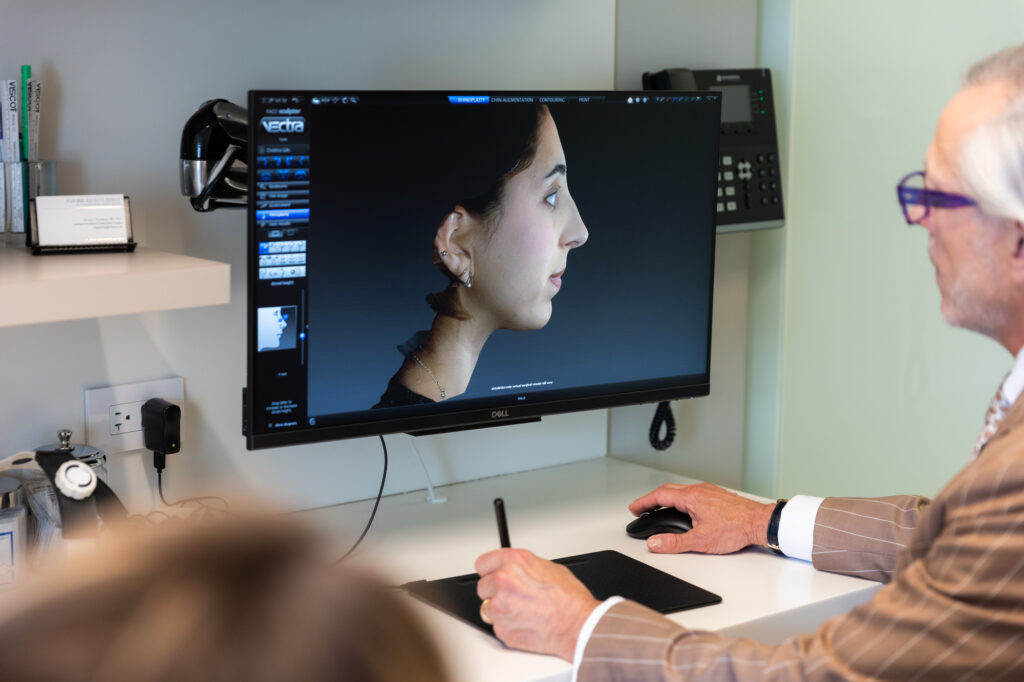
During your consultation, your surgeon evaluates your facial anatomy, medical history, skin quality, and goals to determine whether rhinoplasty suits you and your current situation. Dr. Pearlman also performs computer imaging on all rhinoplasty and revision rhinoplasty patients to demonstrate potential results.
In some cases, your surgeon may recommend specific forms of rhinoplasty. This can include procedures like an ethnic nose job, revision rhinoplasty, or ultrasonic rhinoplasty.
Will my nose still look natural after rhinoplasty?
A successful rhinoplasty should never draw attention to itself. Instead, it should create a better balance among your facial features while preserving your individual character.
At Pearlman Aesthetic Surgery, we tailor every surgical plan to the patient’s unique anatomy, ethnicity, and aesthetic goals. Rather than creating a “one-size-fits-all” nose, Dr. Pearlman refines your individual proportions so your results look harmonious, timeless, and authentically yours.
How long is the recovery after rhinoplasty?
Recovery varies from patient to patient, but most people feel comfortable returning to work or school within 1 1/2 to 2 weeks. Bruising and swelling typically peak during the first several days before gradually improving.
While you’ll see changes early in the healing process, swelling continues to resolve over the following months, especially around the nasal tip. Because healing occurs gradually, the ultimate results become fully apparent over the course of a year as the tissues continue to settle.
Can rhinoplasty improve breathing as well as appearance?
Yes. Surgeons can combine rhinoplasty with functional procedures that improve airflow through the nose.
Structural issues such as a deviated septum, collapsed nasal valves, or previous injuries may contribute to chronic nasal obstruction. During surgery, your surgeon can address these concerns while also refining the external appearance of the nose.
This comprehensive approach allows many patients to experience both cosmetic enhancement and improved nasal function after a single procedure.

Begin Your Rhinoplasty Journey with Confidence
The nose serves as the centerpiece of the face, influencing facial balance from every angle. Because every patient has different anatomy, achieving exceptional results goes beyond technical precision. It requires careful analysis, artistic judgment, and a personalized surgical strategy.
At Pearlman Aesthetic Surgery, every nose job near Lenox Hill is tailored to the individual. After carefully evaluating your nasal structure and long-term goals, our team develops a surgical plan designed to enhance your features while preserving the characteristics that make you uniquely you.
If you’re considering rhinoplasty, schedule a consultation with Dr. Pearlman and learn how a customized approach to rhinoplasty can create refined, natural-looking results that complement your face for years to come.